Knowing the F.A.S.T acronym saves lives
If there’s one thing Adrian O’Malley knows, it’s that stroke can happen to anyone.
The Carlton man and his wife Konnie were busy preparing for the birth of their first child in 2006 when he woke up early one Saturday morning to find he was paralysed on his right side.
“I had my blood pressure checked when we arrived at the St George Hospital emergency department and that’s when we knew something was wrong. Normal blood pressure is 120/80 and mine was 240/150,” Mr O’Malley said.
“I was a 34-year-old guy who was typically fit and healthy, so the last thing I was thinking about was my blood pressure. It can really sneak up on anyone.
“Because I was young at the time, I didn’t recognise the F.A.S.T signs of stroke. My best mate was a neurologist and he never saw the signs that I’d been living with high blood pressure for years,” he said.
A staggering 4.7 million Australians are living with uncontrolled high blood presure, which is the greatest modifiable risk factor for stroke.
Mr O’Malley spent nine weeks in hospital and had to learn to walk and talk again. The stroke has left him with a number of disabilites including vision impairment which means he is unable to drive.
As he approaches 50-years-old, Mr O’Malley is dedicated to his health and enjoys bush walking.
“Stroke is preventable and I want to take all of the necessary steps I can to keep healthy,” he said.
“Nowadays whenever I am visiting my doctor for a sore knee or a headache I aways make sure they check my blood pressure – you can never be too safe.”
Mr O’Malley is now a proud advocate for Stroke Foundation and a Peer Facilitator with the Physical Disability Council of New South Wales. He’s passionate about urging people to get regular blood pressure checks.
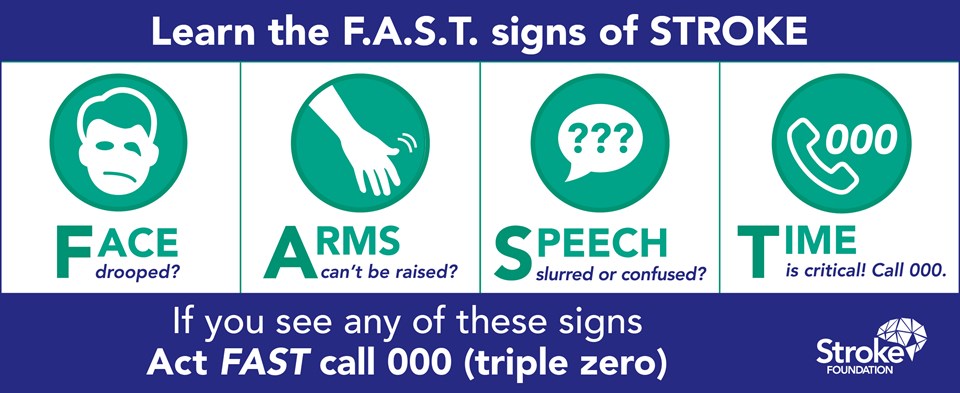
The simple message from Stroke Foundation is to learn the F.A.S.T acronym.
FACE – has their mouth drooped?
ARMS – Can they lift both arms?
SPEECH – Is their speech slurred?
TIME is critical. If any of these signs appears, call 000 immediately.