
Advocating for Dignity: Adrian’s Fight for Fairness (in the NSW Taxi System)
Nineteen years ago, when Adrian walked into the Roads and Traffic Authority (RTA) just six weeks after leaving hospital, he wasn’t expecting red tape; he was expecting understanding.
“I went to hand in my licence, which as you can imagine affects every aspect of your life,” Adrian remembers. “Instead of giving me the dignity of being able to hand it over and saying, ‘thank you, Adrian,’ they made it difficult. They said I needed evidence from my doctor - I was standing there with a dense right hemiplegia and hemianopia from a subarachnoid stroke, and they couldn’t just accept that.”
“I knew what the problem was and I didn't want to have to pay for a doctor to write a letter to explain the problem when I was there in person willing to hand over my licence.”
That experience, stripped of empathy and full of bureaucracy, lit the spark that would drive Adrian’s lifelong advocacy.
“All I wanted was to make a hard decision in life with dignity. That day, I realised how easily systems can take that away.”
Nearly two decades later, Adrian found himself once again facing barriers - this time within the NSW taxi system.
Fighting for Change
What began as an attempt to highlight problems within a government transport scheme turned into a determined fight for fairness and respect for people with disabilities.
“I wasn’t trying to pick a fight,” Adrian says. “This wasn’t about anger; it was about fixing a problem. I just wanted to be heard.”
When he was repeatedly fobbed after calling his local member, off repeatedly and making promises but not following through with them. I was made to feel like the problem, not the problem itself. But Adrian persisted; he wanted to draw attention to a regulatory gap that allowed drivers to refuse passengers with disabilities - with no real consequences.
“It’s a scheme with 38,000 participants. My story wasn’t unique. I knew if I could get into the room, the story would tell itself. A dad and his daughter at the airport, being treated differently because Dad is a Person with Disability. That’s not the Australia I believe in.”
Adrian’s solution was simple. Give people with disability the legal backing to say, “That’s not just unfair - it’s illegal.”
And after months of persistence, and help from Hamish MacDonald and the ABC, he was finally heard.
Staying Calm in the Face of Injustice
Advocacy takes resilience, and restraint. Adrian describes a powerful moment with his daughter Eve, who witnessed a particularly distressing encounter at the airport.
“I apologised to her for having to watch her dad advocate for us when we were refused service and the driver pulled our luggage out of the taxi and left it on the curb.”
“But she told me, ‘Dad, you were exhausted, you were in pain, and they were being awful - but you never lost it.”
That feedback meant everything to him.
“I can only go to the line. The second I cross it, I stop being an effective advocate and just become an angry man. That’s the hardest part, carrying the internal rage, but projecting calm and purpose. I had to be the better person, every single time.”
It came at a personal cost. But Adrian says the drive to create change, for himself and others, always outweighed the exhaustion.
“If that doesn’t give someone fire, I don’t know what does. But you have to use that fire carefully. Because People with Disability want to participate fully in a society that removes barriers, not puts them in our way. Inclusive, respectful, accessible.”
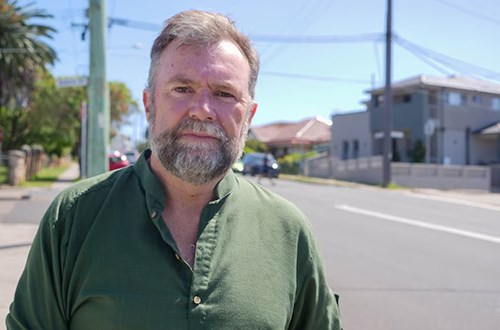
A win for dignity - and a step forward for change
Adrian’s fight didn’t end with speaking up, it led to real change.
In 2026, the New South Wales Government introduced new laws closing the very loophole Adrian had been calling out for years. Taxi drivers who refuse to accept disability subsidy payments can now face fines of up to $3,000, along with stronger penalties for other forms of unfair treatment.
For too long, people relying on the Taxi Transport Subsidy Scheme were being left behind, sometimes literally, with no consequences for drivers who refused to accept the payment method. Now, that gap has been closed.
This is more than a policy change. It’s a shift in accountability.
For Adrian, it means that the next time someone is told “no,” they’re no longer powerless. It means being able to say - this isn’t just wrong, it’s against the law.
And for the broader community, it sends a clear message: dignity is not optional.
Adrian’s advocacy has helped create a system that is fairer, safer, and more respectful for people living with disability and countless others who rely on accessible transport every day.
This is what advocacy in action looks like.
One voice, speaking up.
One experience, turned into change.
One win - that will make a difference for many.
Practical Advocacy: Adrian’s Real-World Advice for Creating Change