Give more and live more and remember you are not alone
My life took a turn on April 26th, 1998, after I suffered two strokes one after the other.
I was robbed of my speech and mobility, and my career disappeared like a puff of smoke.
My husband and I had just moved to Cairns, and we did not know anyone. I felt isolated and frustrated, my emotions and mood took a hit, and the toll was enormous.
I spent five weeks in hospital and was sent home with no discharge plan. I had no information about stroke or where to find support. I fell into a black hole.
My speech was affected. In my mind I was speaking clearly, but I wasn’t. I had a habit of crying and walking away when I got frustrated. My brain was trying to make sense of things and I couldn’t control my emotions.
I thought that I was failing, I didn’t understand that my brain was damaged. I was very vulnerable.
As a coping mechanism I built some imaginary tools. I would imagine a purple hula-hoop around my waist, and in my mind, I would zap people with it. It was a way that I handled rejection and judgement from others.
I grieved for my old life, and I couldn’t talk for about three years. During that time, I made a promise to myself that I would not give up, I would throw my whole self into finding ways to get better. I had my husband's support, which I needed very much.
It took years to learn to walk again. I practiced every day and learned to swim. I found the buoyancy of the water helped me move more easily.
Art classes were also a way to regain some of the mobility I had lost. It took five years to be able to hold a brush but looking at my first art pieces motivated me to get my hand moving.
My art has improved over time. I did collage pieces for a while with two fingers gluing stuff on pieces of wood. This helped my movement and reminded me of my old home in South Australia. I eventually moved onto crayons.
-
It’s the length of time that recovery can take that I think may surprise people. You must retrain your brain, and it takes daily repetition, perseverance and support from people around you. It may take years, which can be hard. Survivors of stroke and those that love them need to accept this.
Even to this day, I still stop and start when I walk, and it’s been 34 years.
My career built up slowly too. I began as a volunteer taking minutes at a local disability group’s meeting. My writing was terrible at first, and I couldn’t follow what was being said, so I taped them and played them back to myself.
I still type with two fingers.
I have continued to volunteer. I have volunteered for the Leukemia Foundation, the Royal Flying Doctor Service, Tourism Cairns and Cairns Language College.
My most important and fulfilling roles, however, have been as a member of a local ‘Rights in Action’ steering committee for people with disabilities for 20 years, and as a consumer voice for stroke at the Cairns Hospital, which I have done for about 4 years.
I was honoured to receive an OAM for my volunteering work (I feel silly adding this in, however Diana said I should).
-
Recently, I have had the pleasure of participating in Dr. David Lawson’s memory research trial. He is a researcher, and a survivor of stroke, which made me feel right at home.
Through this research project, I have made great improvements in my thinking and memory. This shows that you can always make improvements, no matter your age, or the number of years since your stroke.
I found this research project through EnableMe. The community here inspires me. People are working so hard to make gains and support each other wonderfully.
-
Things I have learned over 24 years as a survivor:
Everyone is different.
Volunteer or study. Even if you are unable to use these avenues as a way back into the workforce. It gave me back part of my identity.
Stay positive. This can be hard sometimes but is well worth the effort.
Make small goals, they add up to BIGGER goals.
Go to bed when you’re fatigued. It’s nobody else's damn business. You heal when you nap.
Advice from my memory course with Dr David Lawson. Use a box for storing keys and important paperwork. Keep it in the same place so you know where to find it.
I use computer games to keep my mind active and my eyes moving.
Yes, I still use the imaginary purple hula-hoop when someone makes me sad or mad.
I hope this is helpful, and always remember, you are not alone.
-
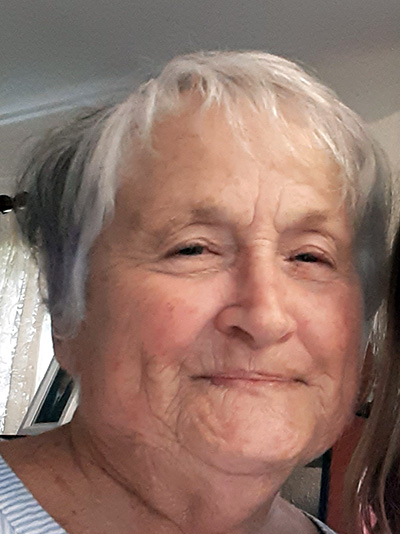
This blog is dedicated to my husband, who recently passed away during COVID-19, my sons and their wives, my eldest grandson Zac, the little ones Tom and Hanna, and my brother and sister. I am very proud, and grateful for them all.