I Had No Clue I Was Having a Stroke
By Denise
If you'd asked me before my stroke what a stroke looked like, I probably would have imagined someone clutching their arm, collapsing or knowing something was seriously wrong.
That wasn't my experience at all. I had absolutely no clue I was having a stroke.
It was a beautiful sunny day on 31 January this year. I'd been having coffee with a friend and came home because I wanted to hang some washing out. I love pegging out the washing, and it was too nice a day to waste.
I was standing on my balcony hanging clothes when my left arm started aching.
Not a little ache. A really heavy ache, like someone had placed an elephant on my arm.
I thought I must have pulled something, and I still didn't think anything was seriously wrong.
I walked inside my unit and decided to sit down. When I went to sit on the lounge, I fell straight onto the floor.
I got back up, brushed myself off and tried again, and fell off the lounge a second time.
I even scraped my shin on the coffee table.
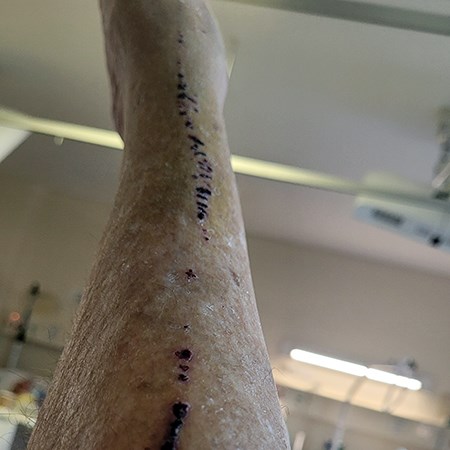
Still, I had no idea I was having a stroke.
Looking back, my brain must have known something was wrong, even if I didn't. Because the next thing I did was run down 18 stairs and head straight for my neighbour's house.
To this day, I don't know how I managed it.
I had no balance, but somehow I made it down those stairs and about 100 metres to her front door.
When she opened the door, all I could say was a slurred, "Hello."
She thought I was joking.
A slurred “Hello!" she replied back.
I looked at her and said, "Hello" again.
That's when she knew something wasn't right.
My neighbour had experienced multiple strokes herself, so she immediately knew what was happening.
"I think you're having a stroke," she told me.
And she got me straight to hospital.
Looking back, I realise just how fortunate I was.
Someone who knew the signs of stroke was exactly where I needed them to be.
I was taken straight through Emergency for scans and tests. Before I knew it, I was surrounded by doctors, nurses and machines.
The strange thing is that even then, I still didn't really understand what was happening.
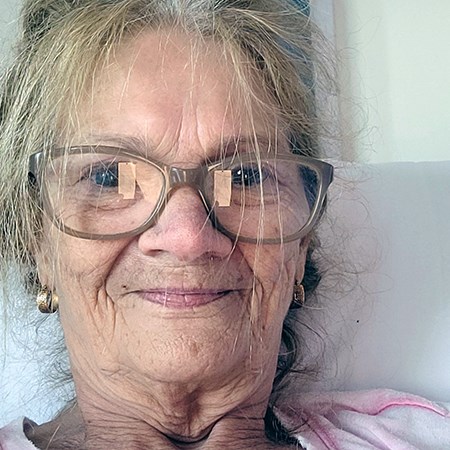
I had a left middle cerebral artery (LMCA) stroke.
The biggest impact for me was my speech. On the day of my stroke, the only word I could say was "hello." For the next few days, words slowly started returning, but it wasn't immediate.
Even now, several months later, there are lingering effects.
Memory and processing have been the biggest challenges.
Before my stroke, I could organise projects, manage details and juggle lots of things at once without thinking twice – I had been a teacher for years.
Now, sometimes my brain simply doesn't cooperate.
A few months after my stroke, I wanted to use an extension cord.
Simple enough, right?
Not for me.
I stood there for what felt like forever, trying to work out how it all connected. I had the extension cord plugged into one thing, and the appliance plugged into something completely different.
Nothing was connected.
I couldn't work it out.
After nearly half an hour, I ended up laughing and crying at the same time because it felt so ridiculous.
Other times I'll number a photo, look away for a moment and completely forget what number I just wrote. They're small things, but they can be incredibly frustrating.
What has helped me is remembering something a friend of mine, who is an occupational therapist, keeps telling me.
"You knew how to do it once. You just have to train your brain to do it again."
And she's right.
Slowly, things are improving.
I can use an extension cord now.
I can see progress; I just have to be patient with myself.
One thing I've learned is that stroke doesn't always leave obvious physical signs.
Many of the challenges I live with are invisible.
The good news is that people have been far kinder than I expected. Sometimes I struggle to get words out. Sometimes I need extra time. Most people simply smile and say, "Take your time."
That kindness means more than they probably realise.
There is another part of my story that I don't usually talk about, but if it helps someone else, then it's worth sharing.
Before my stroke, my doctor prescribed blood-thinning medication.
To save a little money, I stopped taking it.
It wasn't a decision I discussed with anyone. I simply looked at my medications, decided I could manage without one of them, and stopped. The medication I stopped taking was the medication intended to help prevent a stroke.
At the time, I was trying to save $7.70.
Looking back, I can say it plainly; that was a big mistake.
The biggest lesson I've learned from this experience is that stroke can happen to anyone.
I don't smoke. I don't drink. I'm active.
I never thought stroke was something that would happen to me.
Yet it did.
And perhaps the most surprising thing of all is that I never recognised it. I knew the signs of a stroke, I just didn’t apply them to me.
Not when my arm ached.
Not when I fell off the lounge.
Not when I lost my speech.
It wasn't me who recognised the stroke.
It was my neighbour.
My survival instincts kicked in and somehow got me to her front door, but it was her knowledge of stroke that helped save my life.
One thing that has stayed with me since my stroke is the fear that it could happen again.
Before my stroke, if I had an ache or pain, I probably wouldn't have thought much of it. Now, it's different.
If my left arm aches, if I trip over, or if something doesn't feel quite right, my mind immediately goes back to that day.
Sometimes I feel a twinge, a burn or a strange sensation in my left arm and I catch myself wondering, "Is this happening again?"
I can laugh about it sometimes, but the truth is I'm probably a little paranoid now.
That's why learning the common F.A.S.T. signs matters.
You might not recognise them in yourself, but one day, you could recognise them in someone else, and that could make all the difference.
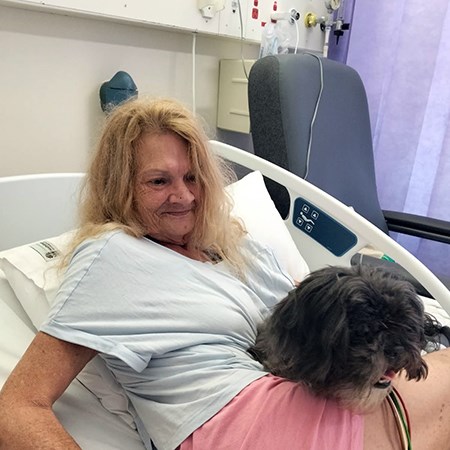
If this story resonates with you and you have question, please call the team on StrokeLine 1800 787 653