My stroke and stroke recovery journey
By Matthew Berryman
I had a haemorrhagic stroke on the 2 of October 2022. I was totally paralysed to the right side of my body and couldn’t talk at all immediately after my stroke. My parents recognised my stroke as I had the F.A.S.T. signs (face, arm, speech) and called 000 (time).
After a few days in hospital, I could start to wriggle my toes and gradually returned to walking, getting dressed, and showering. I couldn’t talk at all for the first three weeks. All I had to communicate with was a sheet of paper with mostly irrelevant symbols, my mobile—I am right-handed so typing one-handed with my left hand was frustratingly slow—and gesturing.
I found some of the main challenges the emotional ones. Initially there was a huge uncertainty about whether I would make a recovery and to what extent. But I quickly found my feet again (literally and metaphorically) and really got stuck into all the therapies—physical, occupational, speech, and psychology—on offer and through a lot of work made significant progress. I go to the gym each week still, and find the exercise helps, as does practicing talking and typing, with my ongoing recovery.
My main issue now is mental fatigue, I get tired much easier than before the stroke. I can’t quite touch type as fast or with the same accuracy as before, nor speak quite as fast or as well. I feel reasonably close to pre-stroke performance in typing, not that I was measuring it before, nor should I be self-judging my performance according to typing speed, nor my speaking. I worry sometimes about judgement from others, that because I can’t speak quite as well, that I am perceived as not as capable intellectually, when my thinking and memory are just as good as before the stroke.
The stroke has changed my outlook on preciousness of life, the importance of taking each moment of every day as it comes, and the value of giving and receiving help. I try and give back through my work and volunteering to other stroke survivors, because I now understand what it’s like and what it means to survive a stroke.
I now volunteer in a stroke lived experience role back on the rehab ward at Flinders Medical Centre where I was an inpatient. I go round and chat with the stroke and other rehab patients and hopefully impart a little bit of hope, and just be there as a friendly and neutral ear to talk to, being neither staff nor family.
And I have returned to work part-time as a software developer, and based on my experience in hospital I have since created an app called Talk For Me. In the first version you could add items and attach an image to that item. Due to my experiences with difficulty typing, it uses image recognition to suggest words / phrases to go along with those images. Because image recognition doesn’t always get things right, there is the option to edit the suggestion. In the first version you could then tap on the item to speak it using text-to-speech output. I then added categories so you can store items in a folder, e.g. one for food. Based on feedback from a blind developer, and my own difficulties with navigating phone interfaces in general, I then added haptic feedback so the user can tell when they’ve interacted with the app somehow. Further development continues, and I am now testing a version for automatic sentence generation from selected words.
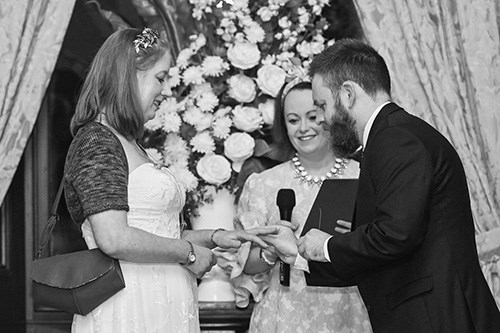
I have recently got married, and each step down the aisle felt so magical after my recovery, from not being able to walk at all through to being able to walk again thanks to the amazing physios and occupational therapists.