My stroke began with severe vertigo
By Karla
Sometimes stroke symptoms don’t look the way people expect. My stroke began with severe vertigo, vomiting and a headache unlike anything I had experienced before.
The day of my stroke started out like any other weekend day.
For a couple of weeks, I had a sore shoulder that was radiating pain into my neck. At the time I did not think too much of it. That morning my son and his friends had just dropped off my new couch, they put it in place and then left me to settle in.
I had just eaten a Brazilian cheese puff and made myself a hot chocolate about to try out the new couch, and to this day those two things still make me feel nauseous when I think about them.
I went to the bathroom and suddenly experienced extreme vertigo, it was not the kind of dizziness where the room spins for a moment and settles. The sensation was intense and I struggled to stay upright. I had to use the wall to steady myself as I made my way back to the couch to grab my phone.
At first I thought it was vertigo. I had experienced vertigo after COVID before and it felt similar, although this time the world seemed to be spinning in a completely different way.
I called my mum and told her I thought I had vertigo and might need some help. My husband was at work, he works FIFO, so Mum was the closest person and I knew I would be home alone for the next few days.
Not long after that I became violently ill and started vomiting. Then a headache began unlike anything I had ever experienced before, it felt searing hot inside my head.
I called Mum again and told her I thought I might actually be having a stroke. I am not sure she believed me at first, but my sister (who was with her at the time) called 000 anyway.
Around that time I noticed my face felt numb, like when you have been to the dentist or when you are having an allergic reaction. Thinking back, I had noticed some unusual sensations in my face in the days leading up to this, but I hadn’t paid it much attention.
With the headache pain and the numbness, I knew something serious was happening. I called 000 myself and the operator told me my sister had already called and an ambulance was on the way.
The operator stayed on the phone with me and calmly talked me through what was happening. While I was speaking with her I noticed my voice becoming weaker and weaker, forming full sentences was becoming harder.
The dizziness was overwhelming and my vision was becoming blurred like double vision. Before the ambulance arrived I sent my husband a message telling him I loved him, it took a lot to type that message because my vision and coordination were already starting to go but I was so scared of what was happening I needed to do it.
Around this time my mum and sister had managed to contact my sons, who arrived really quickly along with the ambulance.
When the ambulance officers came in I found it really difficult to explain what was happening. I told them as coherently as I could that I thought I was having a stroke, but I could not stop vomiting and I could barely keep my eyes open because the dizziness and double vision were so intense.
One of the ambulance officers asked if I had taken any medication and what medications I was on. My oldest son mentioned that I had been dealing with a sore shoulder and neck for a couple of weeks.
The officer confidently said he thought I was having a reaction to medication or experiencing vertigo. My youngest son spoke up and said, “You should listen to what my mum is saying.” I clearly recall the ambulance officer saying he was certain it was just vertigo based on his own experience.
I was terrified on the way to hospital because even though they were trying to reassure me it was probably something minor, I knew something was seriously wrong.
When we arrived at the emergency department those same assumptions were passed on during the handover to the triage nurse. The nurse was very firm. She asked her own questions, took my vitals and quickly decided that a stroke assessment needed to happen as a priority. I felt incredibly grateful to that nurse in that moment. I did not have the classic stroke symptoms people often hear about, but I still needed urgent care.
I have reflected on that experience, how stroke is recognised and treated, particularly for women. Symptoms can present differently and are sometimes misunderstood or minimised. Greater awareness, better training and continued investment in stroke care and research are so important to make sure people receive the right care at the right time.
I don’t fully recall everything that happened next, but I do remember spending what felt like an extraordinary amount of time in the MRI machine. One of the songs playing was “Don’t Give Up, You’ve Got the Music in You,”. The scans confirmed that I had strokes in the cerebellum and medulla caused by a vertebral artery dissection.
One of the things my experience showed me is that strokes do not always look the way people expect them to.
Most people are familiar with the F.A.S.T. signs, facial drooping, arm weakness and speech changes. Strokes can present very differently depending on where they occur in the brain.
Some of my symptoms came on really quickly, such as the severe vertigo, vomiting and double vision. Others I did not notice until the initial emergency had settled down.
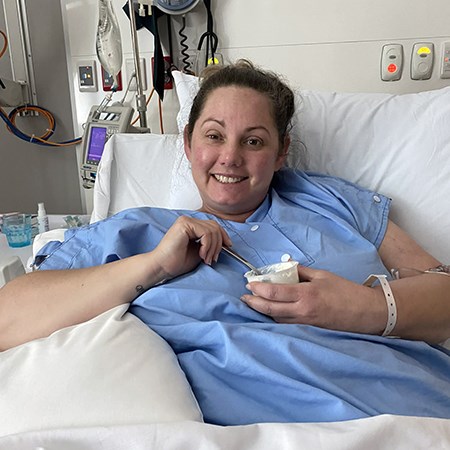
I developed right sided facial changes including a drooping eyelid and mild facial weakness, and numbness on the left side of my body. I remember picking up what I though was a cold pudding from my tray and realising when I put it in my mouth that it was in fact a hot custard. Temperature sensation had also changed. Although it has improved over time, cold can still feel very intense on certain parts of my skin, getting into a cold pool can feel painful.
Dysphagia developed as well, and initially I could not eat at all. Later I could only manage soft foods, then things that had been cut into tiny pieces. Even now, if I become very fatigued I notice swallowing can become more difficult again, so I sometimes move to a shake diet until things settle.
Another strange effect was a change in my sense of body position. When I thought my head was sitting straight it was actually tilted to the side. During vestibular rehabilitation the therapists would adjust my head and tell me it was straight, but it genuinely felt like they were tipping it sideways, I would ask my husband if they were messing with me and even ask him to take a picture to prove it. It took time for my brain to recalibrate.
"Despite how frightening the experience was, I received incredibly good care in hospital"
In the early days my balance was so affected that I needed help just to get out of bed. With the support of the stroke team my recovery progressed much faster than anyone expected.
One nurse in particular, Nature, had a big impact on my recovery. She was wonderfully caring but also very no nonsense in the best possible way. She encouraged me to keep trying and, in a kind, but firm way pushed me to do what I could to get better, I like the room dim and she would come in and open the curtains and remind me I needed sunshine and that my family would want to see me sitting up on the chair today. I have wondered if she even realises what kind of impact her approach had on me in the early days of my recovery.
My stroke doctor was also exceptional. Nothing was ever treated as a silly question. Everything was explained clearly to me and my family so we understood what had happened and what recovery might look like.
Initially we were told my hospital stay might be around 52 days, but my early recovery moved quickly. By day seven I was asking if I could go home, and by day ten my wish was granted and I was discharged to continue recovery in the comfort of home.
I continued rehabilitation through the outpatient stroke clinic which included physiotherapy and psychological support. I also sought private vestibular therapy to manage the ongoing vestibular issues and balance.
My care through the stroke clinic continued for around 18 months after my stroke, I felt like I graduated when they told me I didn’t need to come in for check-ups anymore. Even discharge from the stroke clinic was handled with real care and clear guidance about what to look out for and how to contact the clinic if anything changed.
One of the most important things I want people to understand is that strokes do not always look the same. Knowing your risk factors and trusting your instincts about your own body is important. If something feels wrong, it is important to advocate for yourself.
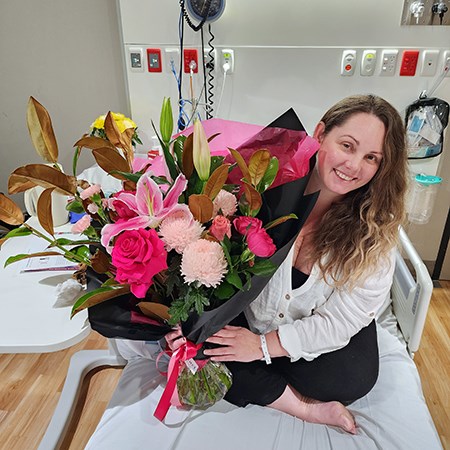
Recovery from stroke also takes time, it is never linear and no two recovery journeys are the same. There can be a strong urge to get back to normal life quickly, especially when it comes to returning to work or usual responsibilities. Returning too soon can sometimes set recovery back, learning how to pace yourself and manage fatigue is incredibly important.
Even now I have to be mindful of my energy levels. If I become run down, my vestibular system can start to go offline again and symptoms like dizziness or swallowing coordination can reappear. Because of this I have learned the importance of maintaining vestibular fitness and listening to my body when it needs rest.
For me there was also a grieving process that came with recovery. I am different to the person I was before the stroke, and I have had to grieve that person and the lifestyle we had before it happened. When you are learning to live with changes in your body, your energy levels and your capacity, acknowledging the emotional side of recovery is just as important as the physical rehabilitation.
I am incredibly grateful for the care that helped me recover, and I hope sharing my story helps others recognise the signs and seek help quickly. Stroke symptoms can look different for everyone, and knowing that could save a life.