When Pregnancy and Stroke Collide: Why Research Matters
Pregnancy is meant to be a time of hope and anticipation - but for some women, it becomes the moment their life changes forever.
For Letisha, Elisha, and Melita, pregnancy was when they each experienced a stroke. Their journeys are deeply personal yet connected by a shared truth: stroke during pregnancy is still not spoken about enough - and for too long; it has been misunderstood, under-researched, and overlooked.
At a recent research conference (ANZSOC), new evidence on pregnancy and stroke took centre stage. For these women, hearing this research presented wasn’t just academic - it was emotional, validating, and confronting.
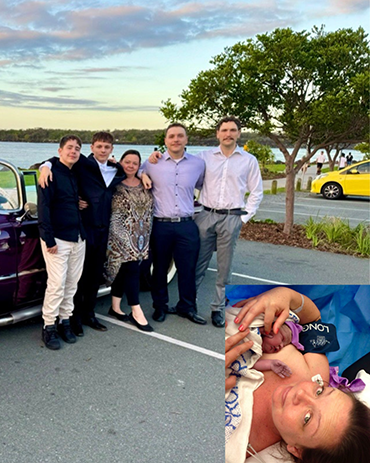
“For the first time, it felt like my story was being told.”
For Letisha, the research struck close to home.
“I am so glad that we are shedding some light on this not-so-often discussed area of stroke research,” she says.
For years, Letisha had been calling for investigations into vascular changes during pregnancy and how hormonal shifts may increase stroke risk - long before the topic gained traction.
“I always felt it was important for people to know this information and the risks, but it never seemed to gain momentum.”
Sitting in the audience during Professor Cheryl Bushnell’s presentation on pregnancy-related stroke was unexpectedly overwhelming.
“I’m used to hearing about rehab or aphasia or digital health - areas I’m not emotionally invested in. But this was different. This research was my stroke experience.”
Letisha scanned the crowded room and realised she was surrounded by hundreds of people who hadn’t lived what she had lived.
“For the first time ever, I felt alone listening to something that so deeply reflected my story - and something I had not heard spoken about in the twelve years since my stroke.”
Overwhelmed, she stepped out of the room and cried, before meeting-up with fellow survivors Melita and Elisha for what she describes as “some much-needed hugs.”
One moment in particular stayed with her.
“I resonate with something Elisha said to me that I had never thought of before: our children also survived our strokes with us.”
Letisha’s hope for the future is clear.
“I want to see more research prioritised on hormonal and vascular changes in women - across pregnancy, the reproductive years and into perimenopause.”
Now in her perimenopausal years, she finds herself reflecting on the risks once again - but with new reassurance that science is beginning to catch up to lived experience.
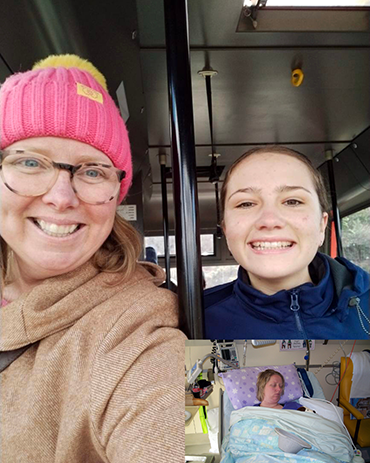
“For the first time, I felt hope.”
For Elisha, who had her stroke at just 16 weeks pregnant, hearing pregnancy stroke research presented so openly was both confronting and inspiring.
“I was shocked,” she admits. “Before this, I had never heard health professionals speak about stroke during pregnancy as anything other than a rare fluke of bad luck.”
She made sure to attend each of Professor Bushnell’s sessions - absorbing every detail.
“I was struggling with the topic and fascinated and excited all at once.”
The struggle came from imagining how different things might have been if this knowledge had existed 16 years earlier.
“I couldn’t help but think what a difference this type of information could have made to my life and my outcome.”
But excitement quickly followed.
“For the first time, women who experience stroke, or even pre-stroke symptoms, during pregnancy might not have to walk the rough road that I did.”
Elisha says knowing that researchers are actively identifying warning signs and developing better care pathways is deeply encouraging.
“Ultimately, almost every stroke survivor wants the same thing - a world where other people don’t experience stroke. Hearing that someone is working so passionately to prevent what impacted me brings a real sense of hope.”
As a mother, the impact is even more personal.
“I left those sessions feeling optimistic - hoping that by the time my daughter, who survived my stroke with me is ready to have children, there will be better care and supports in place to reduce her risk.”

Why This Research Is So Important
Stroke Foundation’s Head of Evidence, Quality and Research, Melita, who also survived a pregnancy-related stroke, emphasises how urgently this space needs attention.
“Stroke is a leading cause of death in women in Australia, despite more than 80% of strokes being preventable.”
Yet misconceptions persist.
“There’s still a belief that strokes only happen to elderly people or those with serious health problems, but stroke is becoming more common in younger people, including during pregnancy and even in babies.”
While women overall have a slightly lower lifetime risk of stroke than men, outcomes are often worse.
“Women typically experience poorer survival, recovery and quality of life - and it’s possible that unequal access to timely treatment plays a role.”
Complications during pregnancy are also significant risk factors.
“There is increasing evidence that conditions like high blood pressure or diabetes in pregnancy can increase a woman’s stroke risk.”
Melita encourages women who experience these conditions to talk to their GP or specialist about their stroke risk factors, with blood pressure management being particularly important at every stage of life.
And when stroke does strike, time matters.
“Stroke treatment is time-critical - the faster care begins, the less damage to the brain.”
Shining a Light Forward
For Letisha, Elisha and Melita, seeing pregnancy and stroke brought into the research spotlight is powerful, not only because it validates their experiences, but because it offers hope for the future.
Hope that women will be recognised sooner.
Hope that warning signs for an increased risk of stroke in pregnancy won’t be dismissed.
Hope that mothers, and their babies, will face fewer risks and better-care pathways.
Their stories remind us that research is never just data and statistics - it is about real people, real families, and real lives forever changed.
And now, at last, their experiences could help shape knowledge that could save others.