From Mobile Stroke Units to Stroke Unit Certification
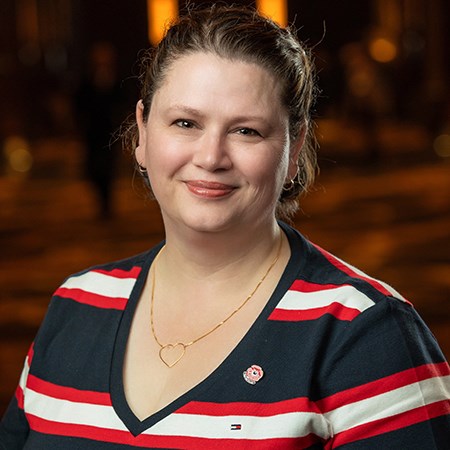
By Skye Coote
Being part of Australia’s first Mobile Stroke Unit (MSU) team was honestly a dream come true.
It felt like we were part of something really important - a huge step forward for stroke care in Melbourne. To be there from the beginning, helping roll it out and seeing it come to life… I feel incredibly lucky.
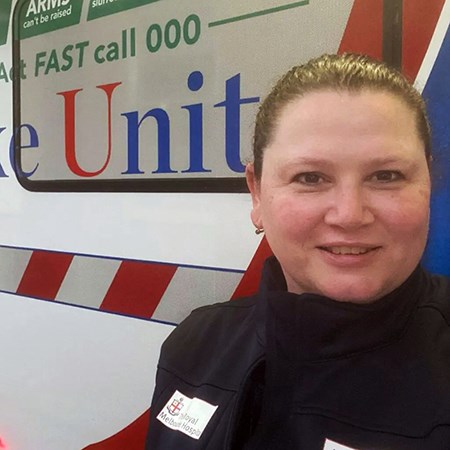
Every call-out was different, but there was always an urgency to each case
The MSU is dispatched alongside a regular ambulance crew, who usually arrive first. When we get there, we take a handover from the paramedics and start assessing the patient straight away.
From there, it’s all about teamwork.
The nurse begins their assessment and links in with a neurologist via telemedicine. If needed, the neurologist can assess the patient remotely. If a scan is required, we bring the patient onto the MSU, where the radiographer has the CT scanner ready to go.
We run a CT scan on board, review the images in real time, and make a treatment decision - all before we’ve left the patient’s house.
If treatment is needed, we start it immediately.
Everything is happening at once - monitoring the patient, preparing scans, communicating with the hospital, and updating the family. It’s fast, focused, and incredibly collaborative.
The difference this makes is huge.
We’re treating people where they are; at home, at work, at the shops - sometimes just minutes after their stroke begins.
And you can see the impact right in front of you.
I’ve watched patients who couldn’t move or speak start to regain movement on the way to hospital. Their speech becomes clearer. Their face starts to return to normal.
It’s hard to describe how powerful that is to witness.
Those moments stay with you. They remind you exactly why this work matters.
I’ve always been drawn to fast-paced environments. I started in emergency nursing and then moved into ICU - so working on the MSU felt like coming home to that kind of environment.
But it’s different out there.
You don’t have a full hospital team behind you. It’s just the MSU crew and the paramedics on scene. You have to make quick decisions with limited information, trust your skills and knowledge, and trust each other.
That trust in your team becomes everything.
It’s not for everyone. Some incredibly skilled nurses prefer the structure of hospital settings. But for me, I loved it.
There are so many moments that stay with me.
One that stands out is a man who was completely paralysed down one side and unable to speak when we arrived. After his scan, we identified a large clot and immediately started clot busting medication before taking him to hospital for further treatment - and after his procedure, he high-fived the team with the arm that had been paralysed.
He went home three days later, moments like that never leave you.
But one of the hardest parts of the job was seeing people who came to us too late.
Not because they didn’t care, but because they didn’t know.
I’ve seen families do what they thought was the right thing, putting someone to bed to rest, not realising they were having a stroke. By the time help was called, the window for treatment had passed.
That’s why awareness is so important.
Knowing the signs. Acting quickly. It can change everything.
Continuing the Work
Now, in my role with Stroke Foundation, I’m focused on something just as important - making sure people receive the best possible care when they get to hospital.
Through the Stroke Centre Certification program, we’re working to ensure hospitals meet high standards of care. When a hospital is certified, it means patients and families can trust the level of care they’ll receive.
For me, a good outcome is simple.
- Every paramedic equipped with the tools and knowledge to assess and treat stroke early.
- Technology supporting faster diagnosis and decision-making.
- Hospitals continuing that care with the right systems and staffing in place.
Because every person deserves the best chance of recovery.
And as I’ve seen firsthand - those first moments can change everything.